50% off on product page · save $23.99
Make Olive Skin Glow: Compare Clothing and Makeup Shades
Start with the color, not the label
Olive skin can be light, medium, or deep. Two people with olive skin may reach for different versions of green, red, or white, so treat every suggested palette as a place to begin. The useful question is not “Does olive skin wear this color?” but “Does this particular shade work for me?”
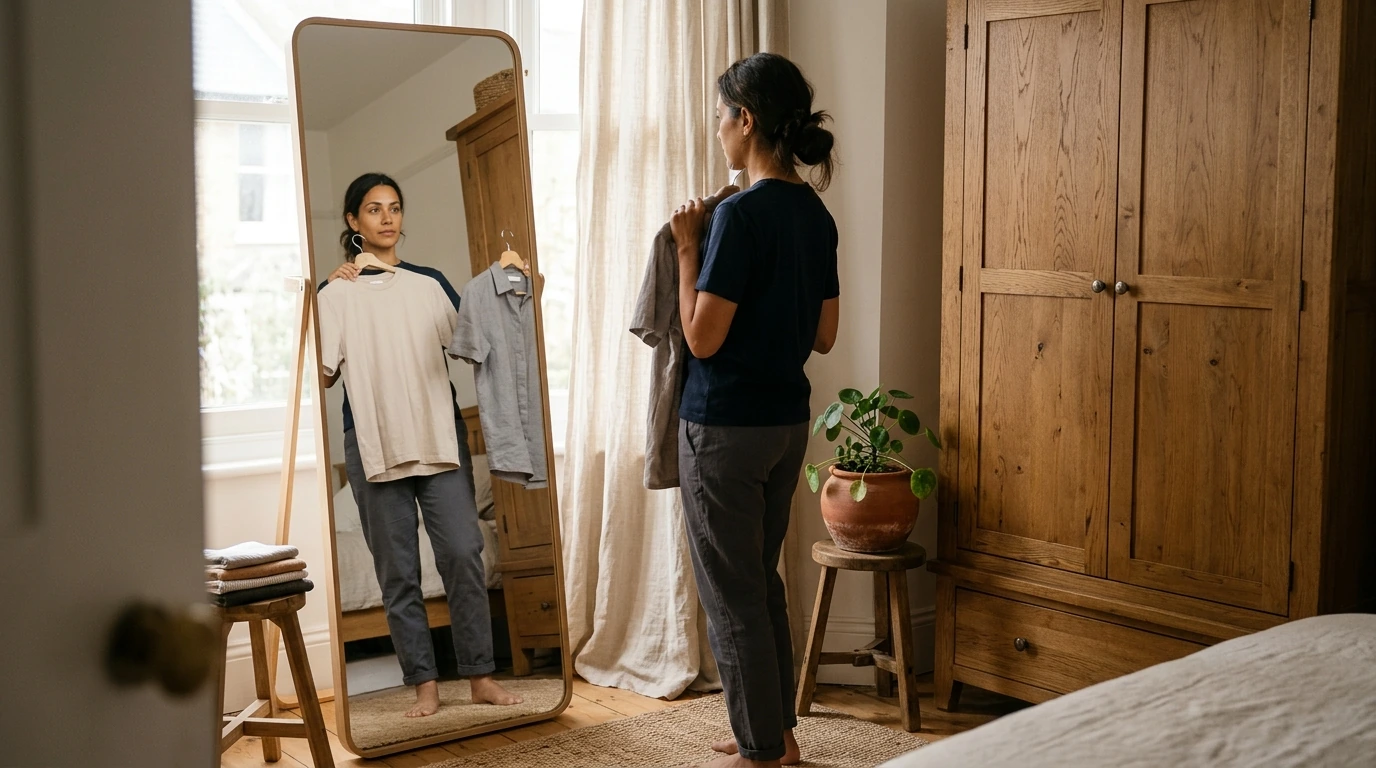
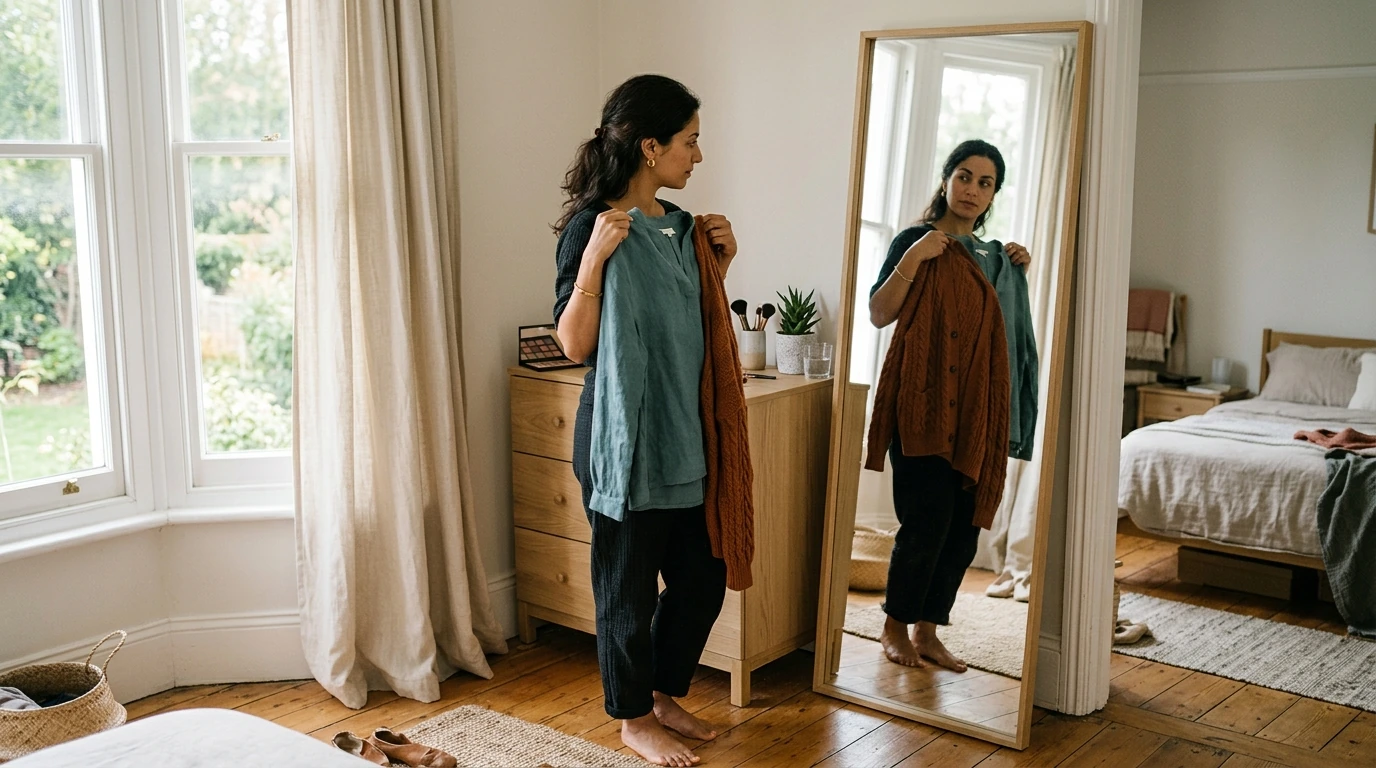
Hold clothing near your face in indirect daylight, ideally without strong overhead lighting. Notice whether your skin looks even and lively. Then notice whether under-eye shadows, redness, or a gray cast seem more prominent. You do not need to diagnose your undertone to make that comparison; you only need to see which result you prefer.
Compare neighboring shades before ruling out an entire color family. Emerald may suit you better than lime, while cream may feel gentler than stark white. If you are curious about why adjacent hues can look so different, the Adobe Color Wheel is a useful way to explore how colors relate. Let your mirror make the final call.
Compare clothing colors side by side
Rich greens, teal, burgundy, and warm reds are useful starting points, not guaranteed matches. If bright red overwhelms you, try brick or wine. For everyday neutrals, compare cream with crisp white, and chocolate with black.
| Color family | Try | Compare with |
|---|---|---|
| Green | Emerald or deep olive | Teal or sage |
| Red and pink | Brick or berry | Muted rose or wine |
| Blue | Navy or petrol blue | Cobalt or slate |
| Light neutrals | Cream | Ivory or crisp white |
| Dark neutrals | Chocolate or charcoal | Espresso or black |
Test a scarf or neckline when you can. Color near your face gives you a clearer comparison than color on trousers or shoes.
Featured in this guide
Colors That Finally Make Olive Skin Glow | Olive Skin Tone Color Guide eBook | Best Clothing Colors, Makeup & Wardrobe Palette Digital Download
Let makeup work with your wardrobe
For foundation, test a small amount along your jaw so you can compare it with both your face and neck. Let it settle, then look again in daylight. If it reads noticeably pink, orange, or gray against your skin, try a nearby shade.
For lips and cheeks, compare specific shades rather than relying only on warm-or-cool labels. A sheer berry and a deep berry can serve different outfits. Try a new makeup shade with clothes you already wear before deciding whether it fills a useful gap.
Build a palette you will wear
Choose two dependable neutrals, two colors you enjoy near your face, and one accent you love. See how they work with what you own before adding anything new. When considering a statement piece such as our Silk Halter Maxi Dress, compare its color near your face and consider how you would style it.
If you want a dedicated starting point for clothing and makeup comparisons, explore our Colors That Finally Make Olive Skin Glow digital guide. Keep the shades you enjoy; leave behind any rule that does not work for you.
Before choosing, compare the product details with your daily routine, available space, care needs, and preferred setup. The strongest option is usually the one that fits the intended use clearly and remains simple to clean, store, and check before repeat use.
It is also worth checking measurements, material notes, included parts, and compatibility details so the item matches the way it will be used after delivery.
Before choosing, compare the product details with your daily routine, available space, care needs, and preferred setup. The strongest option is usually the one that fits the intended use clearly and remains simple to clean, store, and check before repeat use.
FAQ
What colors do colors make?
Mixing colors produces different results depending on the colors and medium involved. For your wardrobe, comparing nearby shades is more useful than mixing them.
What 3 colors to make all colors?
Red, yellow, and blue are traditional primary colors in introductory painting, but no three pigments can create every visible color. Clothing colors are best judged as the specific shades you can wear.
What colors does olive skin look best in?
Olive skin typically has green, yellow, or golden undertones, so saturated colors often create a polished contrast without making the complexion look dull. Compare garments in natural daylight and hold each color within six inches of your face to see whether it brightens the skin or emphasizes grayness.
See if Colors That Finally Make Olive Skin Glow | Olive Skin Tone Color Guide eBook | Best Clothing Colors, Makeup & Wardrobe Palette Digital Download fits your setup