-
Shop
- Advanced Technologies
- AI Skills for Creators & Freelancers
- AI Client Management
- AI Ethics
- AI Mindset
- AI Tools & Prompts
- AI Writing & Content Creation
- Audio, Voice & Music
- Design & Visual Creation
- Email, Messaging & Communication
- Freelancing & Business
- Marketing, Ads & Conversion
- Productivity, Workflow & Automation
- SEO & Search Optimization
- Social Media Content & Growth
- Strategy, Planning & Analytics
- Video Creation & Editing
- AI Skills Mastery 2026 Collection
- Apple Accessories
- Armani
- Arts, Crafts & Hobbies
- Back to School
- Bathroom
- Beauty & Skincare
- Beauty Guides Collection
- Best-Sellers
- Black Friday
- Black Friday Sale
- Car Accessories
- Career Growth
- Christmas Collection
- Dating & Social Skills
- Denim
- Digital Resources
- AI & Technology
- AI Skills
- Beauty
- Budgeting & Saving
- Car Buying & Ownership
- Cozy Feast Collection
- Electronics & Technology
- Emotional Intelligence
- Entrepreneurship & Business Growth
- Financial Education
- Financial Independence
- Financial Mindset & Psychology
- Goal Setting
- Hobbies
- Home Styling & Organization
- Kitchen & Recipes
- Leadership
- Mindfulness
- Mindset
- Motivation
- Online Business
- Parenting & Child Development
- Personal Style & Fashion
- Pet Lifestyle & Wellness
- Positive Thinking
- Self Confidence
- Sleep Improvement
- Smart Life with AI
- Stress Management & Relaxation
- Travel Planning
- Wellness
- Yoga & Fitness
- Yoga & Mind-Body Practices
- Education & Learning
- Family & Parenting
- Fashion
- Alexander McQueen
- Bags
- Bags & Wallets
- Belts
- Blazers
- Blouses & Shirts
- Bottega Veneta
- Bottoms
- Brunello Cucinelli
- Chloé
- Dolce & Gabbana
- Dresses
- Etro
- Hats & Hair Accessories
- Jacquemus
- Jewelry
- Jil Sander
- Keychains
- Kiton
- Luggage
- Luggage Bags
- Miu Miu
- Off-White
- Outerwear
- Rick Owens
- Socks & Tights
- Sunglasses
- The Row
- Tom Ford
- Valentino Garavani
- Vivienne Westwood
- Watches
- Fashion Accessories
- Food & Recipes
- Furniture
- Gadgets
- Gardening & Plants
- Gift Guide Collection
- Halloween
- Health & Fitness
- Health & Beauty
- Health & Wellness
- Home & Garden
- Home Decor
- Home Electronics
- Home Organization
- Interior Design
- Kids & Babies
- Kids Learning
- Kitchen
- Lighting
- Luxury Brands Collection
- Mental Wellness
- Parenting
- Party Planning
- Patio, Lawn & Garden
- Personal Finance
- Personal Growth
- Pet Care
- Pet Supplies
- Pets
- Shoes
- Sport & Outdoors
- Stress Relief & Relaxation
- Thanksgiving
- Thanksgiving Digital Collection
- AI & Tech-Enhanced Thanksgiving
- Budgeting & Smart Shopping
- Eco-Friendly & Sustainable Thanksgiving
- Family & Kids
- Gift Ideas Guides
- Gratitude & Mindfulness
- History & Meaning
- Hosting & Planning
- Leftovers & Storage
- Pets & Thanksgiving
- Social Media Captions & Ideas
- Thanksgiving DIY Ideas
- Thanksgiving Recipes
- Thanksgiving Products
- Travel
- Wealth
- Wealth Building
Gentle Yoga Stretches: A 15-Minute Home Routine
Gentle Yoga Stretches: A 15-Minute Home Routine
Begin comfortably
You don’t need to reach a particular shape to make time for gentle movement. Set aside a clear space, wear clothing you can move in, and keep a stable chair or cushions nearby if they help. Our 15-minute sequence is a starting point: shorten it, pause, or skip a position whenever you need to.
If you’d like a separate resource for getting familiar with home practice, our Gentle Stretches With Yoga digital guide focuses on beginner-friendly flexibility and easy yoga poses.

Your adaptable 15-minute sequence
Use these times as suggestions, not holds you must complete. Move slowly when changing positions, particularly when getting up from the floor.
| Time | Movement | Comfortable option |
|---|---|---|
| 2 minutes | Seated breathing | Sit comfortably and relax your shoulders. |
| 3 minutes | Seated side bends | Lean gently to each side without forcing a reach. |
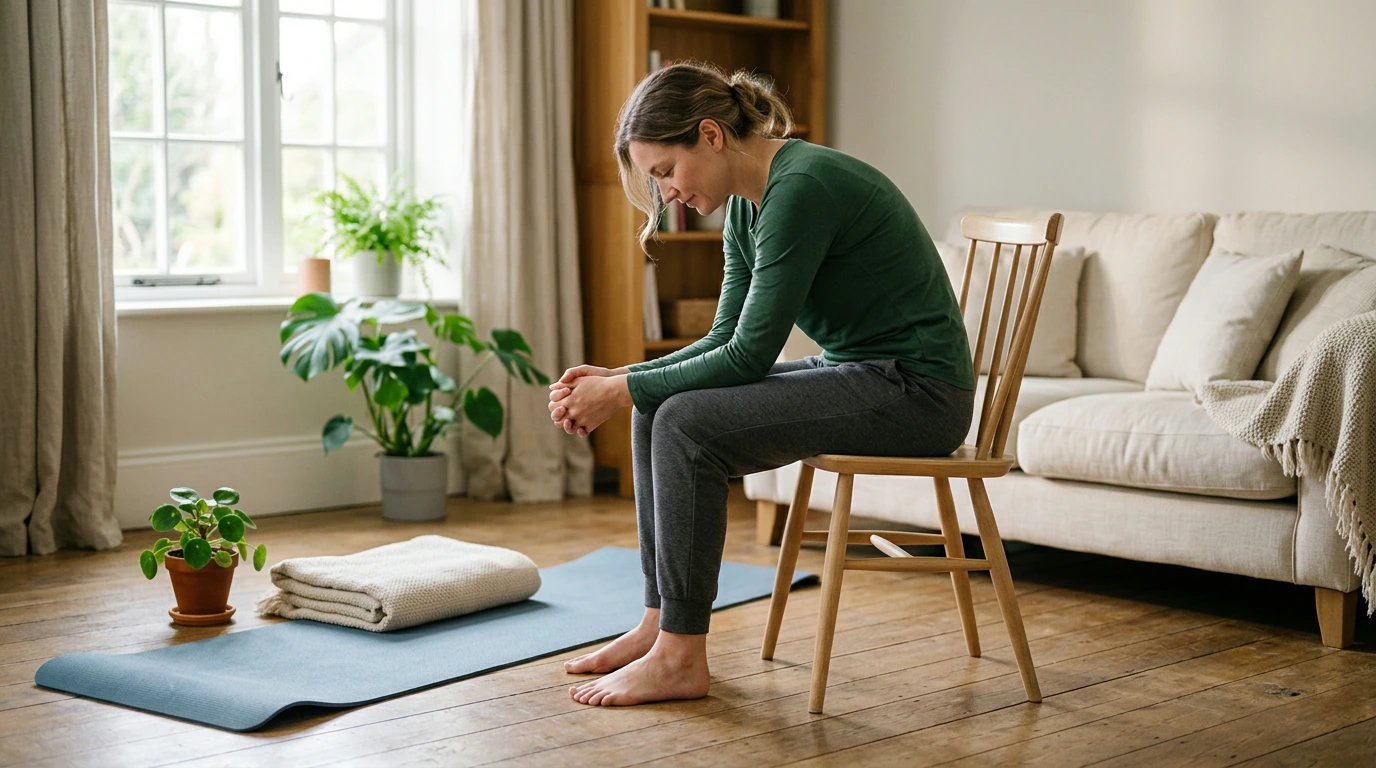
| 3 minutes | Cat–cow | Move on hands and knees or while seated in a stable chair. |
| 3 minutes | Child’s pose | Support your torso with cushions, or rest seated instead. |
| 2 minutes | Reclined knee-to-chest | Bring in one leg at a time without pulling hard. |
| 2 minutes | Quiet rest | Choose a position where you can breathe easily. |
Featured in this guide
Gentle Stretches With Yoga: A Beginner-Friendly Digital Guide for Flexibility | Easy Yoga Poses for Home Practice
How to move through it
For side bends, sit tall and tilt your torso gently. Return to center before switching sides. For cat–cow, round your back slowly, then move toward a mild arch. If you use a chair, plant your feet and make the motion as small as you like.
For child’s pose, kneel and ease your hips back only if that position is comfortable; cushions can support your torso. Seated rest is a good alternative. For knee-to-chest, lie on your back and bring one knee toward your torso. Hold behind your thigh instead of tugging on your knee, then switch legs. Finish with quiet rest.
Make the routine fit your day
You could try one or two movements after waking, use the full sequence during a break, or end the evening with quiet rest. None of those times needs to be the “right” time. Choose a moment when you have enough space to move without rushing, and let the length of your practice fit the day you’re having.
Consistency can start small. A manageable session you’re willing to return to may feel more inviting than a plan that asks too much of you. Comfort and control matter more than staying in a pose longer. If you’re building a home-practice habit, our Gentle Stretches With Yoga digital guide offers a beginner-friendly resource centered on flexibility and home practice.
When your usual surroundings change, it’s fine to keep your practice simple—a seated bend and a few quiet breaths may be enough. If a trip is what’s changing your routine, our Stress-Free Solo Travel with AI eBook is a separate resource for travel planning, not a yoga guide.
Know when to pause
A mild stretching sensation is different from sharp pain. Stop if you feel sharp pain, dizziness, or numbness rather than trying to push through. A chair, cushions, shorter movements, and extra breaks can help you adapt the routine.
If you’re pregnant, managing an injury, or unsure which movements suit a health condition, seek guidance from a qualified healthcare professional before practicing.
Check the product’s listed specifications when evaluating know when to pause.
“Easy-to-follow instructions that have helped me regain flexibility. I’m feeling better than ever!”
Before choosing, compare the product details with your daily routine, available space, care needs, and preferred setup. The strongest option is usually the one that fits the intended use clearly and remains simple to clean, store, and check before repeat use.
FAQ
What are the five best yoga stretches?
There isn’t one best set for everyone. Five gentle movements to consider are seated side bends, chair-supported cat–cow, supported child’s pose, one-leg-at-a-time knee-to-chest, and a comfortable seated forward lean; skip or modify any that don’t feel good.
What are examples of gentle yoga?
Examples include slow seated side bends, chair-supported cat–cow, and a reclined knee-to-chest stretch with one leg at a time. Each can be made smaller or shorter to suit your comfort.
See if Gentle Stretches With Yoga: A Beginner-Friendly Digital Guide for Flexibility | Easy Yoga Poses for Home Practice fits your setup
Was this article helpful?
Yes
No


Leave a comment