-
Shop
- Advanced Technologies
- AI Skills for Creators & Freelancers
- AI Client Management
- AI Ethics
- AI Mindset
- AI Tools & Prompts
- AI Writing & Content Creation
- Audio, Voice & Music
- Design & Visual Creation
- Email, Messaging & Communication
- Freelancing & Business
- Marketing, Ads & Conversion
- Productivity, Workflow & Automation
- SEO & Search Optimization
- Social Media Content & Growth
- Strategy, Planning & Analytics
- Video Creation & Editing
- AI Skills Mastery 2026 Collection
- Apple Accessories
- Armani
- Arts, Crafts & Hobbies
- Back to School
- Bathroom
- Beauty Guides Collection
- Best-Sellers
- Car Accessories
- Dating & Social Skills
- Denim
- Digital Resources
- AI & Technology
- AI Skills
- Beauty
- Budgeting & Saving
- Car Buying & Ownership
- Cozy Feast Collection
- Electronics & Technology
- Emotional Intelligence
- Entrepreneurship & Business Growth
- Financial Education
- Financial Independence
- Financial Mindset & Psychology
- Goal Setting
- Hobbies
- Home Styling & Organization
- Kitchen & Recipes
- Leadership
- Mindfulness
- Mindset
- Motivation
- Online Business
- Parenting & Child Development
- Personal Style & Fashion
- Pet Lifestyle & Wellness
- Positive Thinking
- Self Confidence
- Sleep Improvement
- Smart Life with AI
- Stress Management & Relaxation
- Travel Planning
- Wellness
- Yoga & Fitness
- Yoga & Mind-Body Practices
- Education & Learning
- Family & Parenting
- Fashion
- Alexander McQueen
- Bags
- Bags & Wallets
- Belts
- Blazers
- Blouses & Shirts
- Bottega Veneta
- Bottoms
- Brunello Cucinelli
- Chloé
- Dolce & Gabbana
- Dresses
- Etro
- Hats & Hair Accessories
- Jacquemus
- Jewelry
- Jil Sander
- Keychains
- Kiton
- Luggage
- Luggage Bags
- Miu Miu
- Off-White
- Outerwear
- Rick Owens
- Socks & Tights
- Sunglasses
- The Row
- Tom Ford
- Valentino Garavani
- Vivienne Westwood
- Watches
- Furniture
- Gadgets
- Halloween
- Health & Beauty
- Health & Wellness
- Home & Garden
- Home Decor
- Home Electronics
- Kids & Babies
- Kitchen
- Lighting
- Luxury Brands Collection
- Patio, Lawn & Garden
- Personal Growth
- Pet Care
- Pet Supplies
- Pets
- Shoes
- Sport & Outdoors
- Stress Relief & Relaxation
- Travel
- Wealth
- Wealth Building
- Popular
- Best deals
Brake Noise Guide: What It Means and When to Act
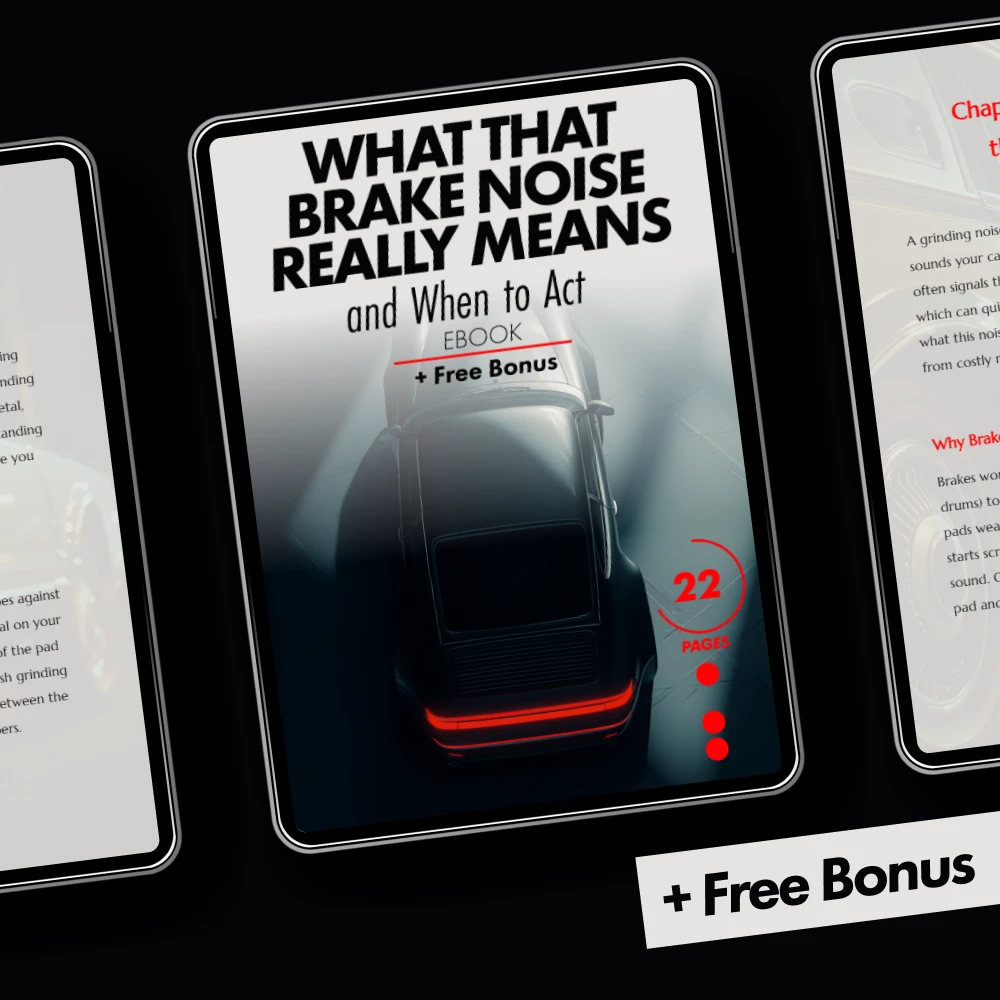
Brake Noise Guide: What It Means and When to Act
Why Brake Noises Deserve Attention
Brakes slow a vehicle by converting motion into heat through friction. As pads, rotors, drums, hardware, moisture, and road debris interact, occasional noise is possible. A momentary squeak does not always indicate failure, especially after rain or extended parking.
However, a new, persistent, or worsening noise can point to worn friction material, corrosion, contamination, overheating, damaged hardware, or another condition requiring inspection. Pay attention to whether the vehicle pulls, the pedal changes, stopping distance increases, or a dashboard warning appears. A car that still stops may nevertheless have a developing brake problem.
Check the listed dimensions for why brake noises deserve attention against the available vehicle space before use.
Featured in this guide
What That Brake Noise Really Means and When to Act – Ultimate eBook Guide for Car Owners
A Refined Guide to Common Brake Sounds
Squealing or squeaking: Higher-pitched sounds can follow damp conditions, but recurring squeals may involve a wear indicator, glazing, dust, vibration, or pad material. If the sound persists after several normal stops, schedule an inspection.
Grinding or scraping: Harsh metal-on-metal noise deserves greater urgency. Severely worn friction material may allow metal components to contact the rotor, potentially impairing braking and increasing damage.
Clicking, clunking, or thumping: These sounds can suggest moving pads, loose hardware, suspension concerns, or nearby wheel components. Pulsation or rhythmic rubbing can also involve rotors, corrosion, tires, wheels, or anti-lock brake operation.
When to Stop Driving
Pull over safely if the pedal sinks toward the floor, becomes unusually hard, or no longer produces predictable braking. Grinding accompanied by reduced stopping power, severe vibration, pulling, smoke, a burning odor, or a brake-fluid leak should also be treated as urgent.
A red brake warning light can indicate a serious fault, although its meaning varies by vehicle. Consult the owner’s manual and seek assistance. An amber anti-lock braking system light may mean that anti-lock operation is unavailable even if conventional braking remains, so prompt inspection is still appropriate.
When safe stopping is uncertain, use roadside assistance or towing. Do not experiment with questionable brakes in traffic.
What to Record Before an Inspection
- Whether the sound occurs with light or hard braking, while reversing, during turns, or without pedal pressure.
- Whether the vehicle is cold, wet, fully warmed, or carrying a heavy load.
- The apparent location and whether the sound changes with speed or pedal pressure.
- Any pulsation, steering-wheel shake, pulling, warning lights, odors, leaks, or longer stopping distance.
An audio recording may help explain an intermittent issue, but never handle a phone while driving. Clear observations can help a technician reproduce the condition; only a hands-on inspection can confirm its cause.
Check the listed dimensions for what to record before an inspection against the available vehicle space before use.
Using the eBook as a Driver Reference
The digital guide organizes common brake sounds and action thresholds into a convenient reference for car owners. It can help drivers describe symptoms, recognize warning signs, and prepare questions for a repair professional.
It does not replace diagnosis, repair, the vehicle owner’s manual, or manufacturer maintenance guidance. Its best role is to make observations more structured before professional inspection.
Check the listed dimensions for using the ebook as a driver reference against the available vehicle space before use.
How to Record the Sound Before an Inspection
- Note whether it occurs during light braking, hard braking, reversing, turning, or driving without pressing the pedal.
- Record whether the vehicle is cold, wet, warmed after a long trip, or carrying a heavy load.
- Identify the apparent location and whether the sound changes with speed or pedal pressure.
- Document pedal pulsation, steering-wheel shake, pulling, warning lights, odors, or longer stopping distance.
An audio recording may help explain an intermittent problem, but never handle a phone while driving. Before authorizing work, review the Federal Trade Commission’s Auto Repair Basics for guidance on estimates and repair documentation.
Check the listed dimensions for how to record the sound before an inspection against the available vehicle space before use.
Compare related options such as AI Prompts for Hobby Project Ideas Checklist | Creative Hobby Planner, Smart AI Prompt Guide, Digital Download for Inspiration & New Projects to match features, dimensions, and use case before choosing.
FAQ
What does brake noise indicate?
Brake noise may reflect temporary moisture, normal friction, worn pads, contamination, damaged parts, or loose hardware. Its significance depends on related symptoms such as pedal changes, vibration, warning lights, and reduced stopping performance.
Why is my car making a really loud noise when I brake?
A loud noise may result from severely worn pads, metal contacting a rotor, loose hardware, trapped debris, or another wheel or brake problem. Stop safely and obtain prompt help if it is grinding or accompanied by changed braking, pulling, smoke, leakage, or warning lights.
See if What That Brake Noise Really Means and When to Act – Ultimate eBook Guide for Car Owners fits your setup
Habits in the Age of AI: Smarter Habit Tracking
Sep 14, 2026








Leave a comment